Aitys practice example
An example of musical interaction and the cultural form that informs the project.
Open video in Google DriveA Culturally Grounded Music Therapy Approach for Autistic Children
This practice-based project explores how Aitys, rhythm, dombra-based sensory engagement, call-and-response, and musical improvisation can support regulation, connection, communication, and participation for autistic children in culturally meaningful ways.
Kazakhstan is navigating changes in mental health, education, professional training, and migration. This project starts from a local cultural resource rather than importing a model unchanged. It asks how familiar musical structure can become a bridge for autistic children with different communication styles.
Aitys, also written Aytys, is a centuries-old Kazakh tradition of improvised sung poetry, usually accompanied by dombra. The project adapts interactional principles such as rhythm, turn-taking, response, timing, and improvisation into structured therapeutic sessions.
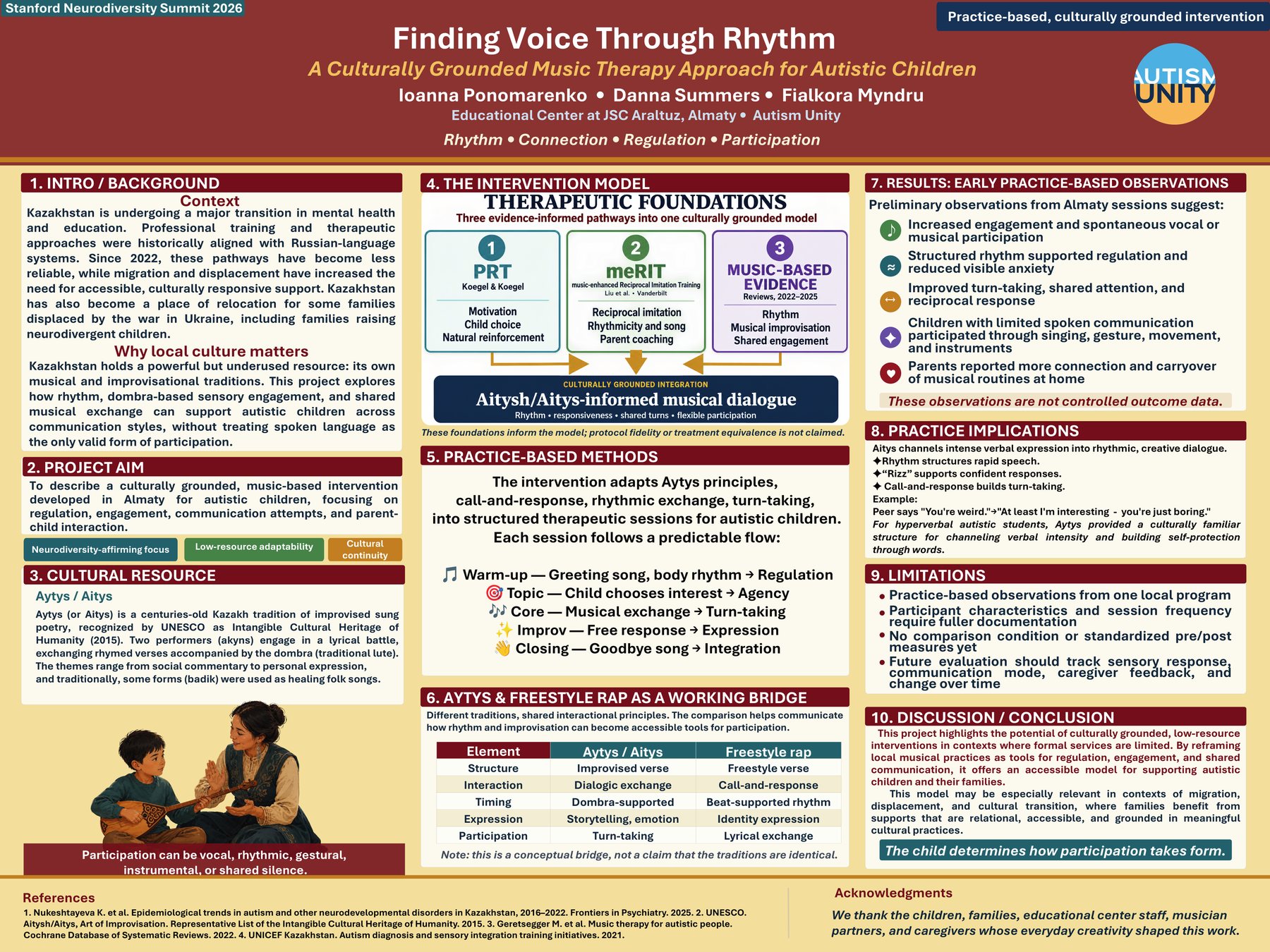
Open the full-resolution PDF.
The structure provides predictability while leaving room for child choice, movement, rhythm, communication, and improvisation.
These videos are hosted in the project Google Drive folder and open directly from this page.
An example of musical interaction and the cultural form that informs the project.
Open video in Google DriveA short practice example showing the dombra as part of the project's rhythmic and sensory context.
Open video in Google DriveThe project brings together local cultural practice in Almaty, psychological and neurodiversity-informed framing, and international collaboration around accessible support for autistic children.
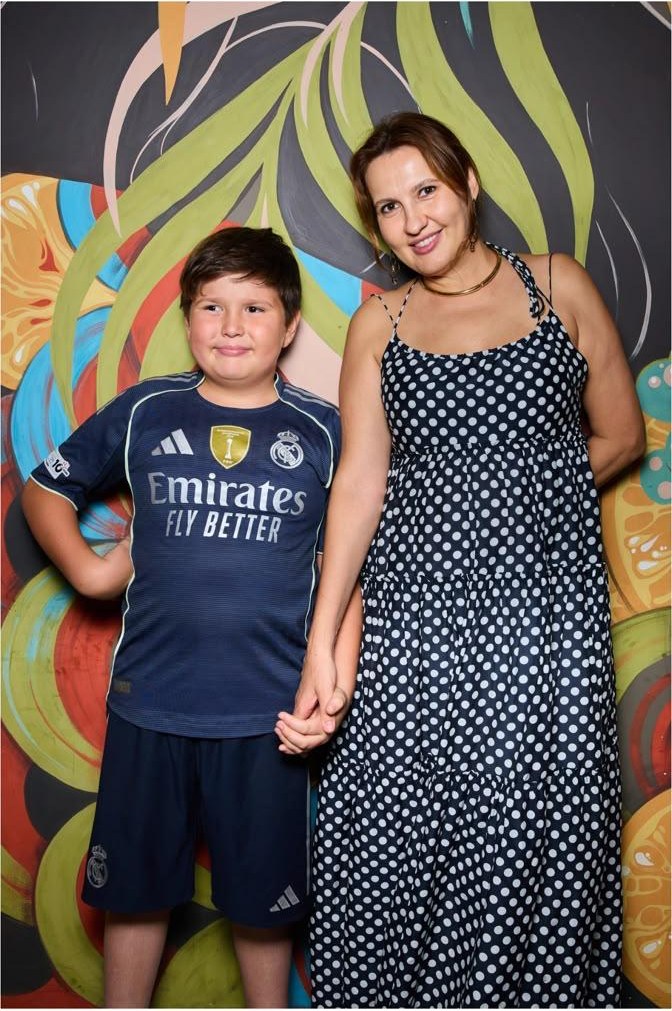
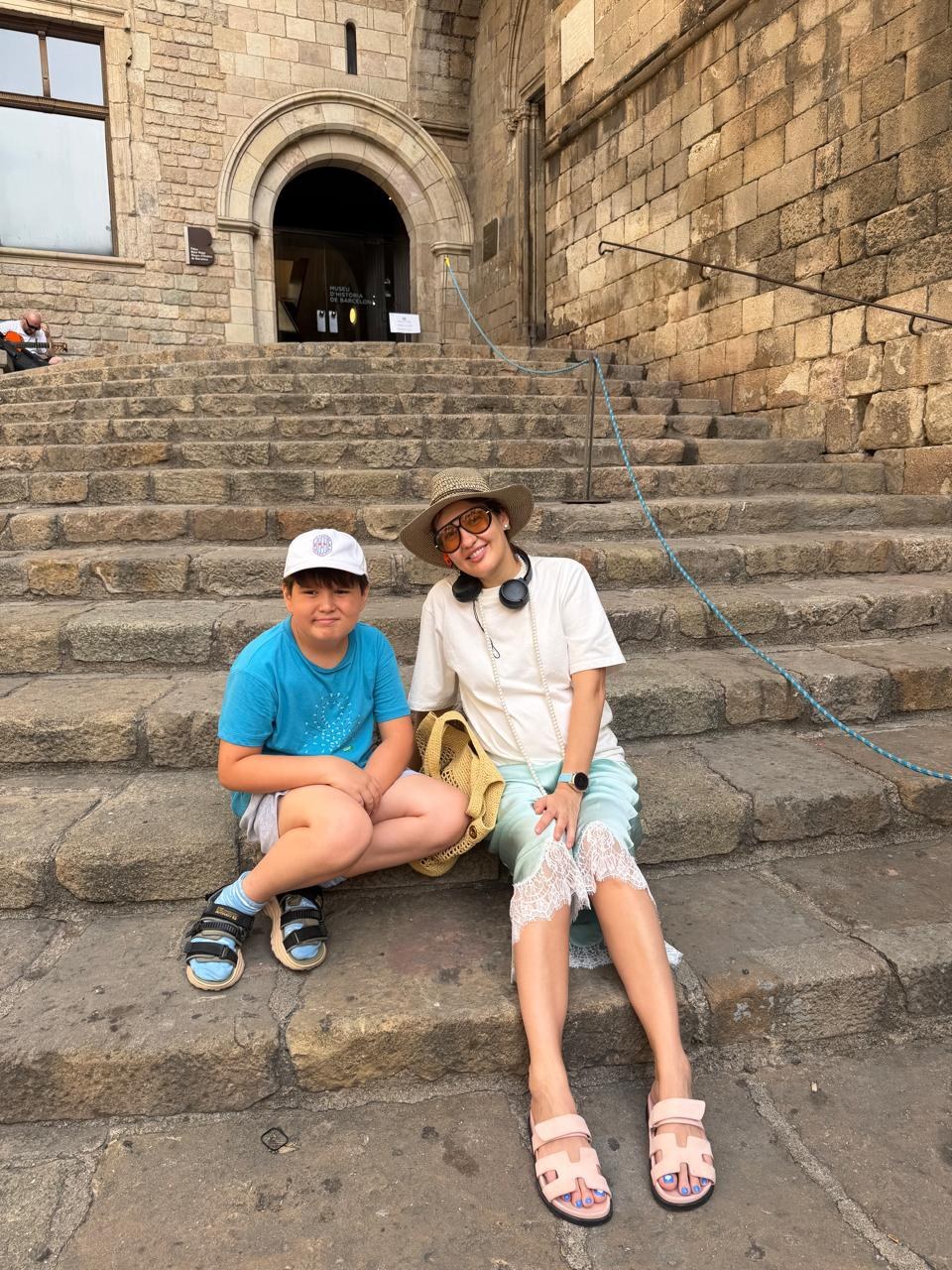
Project photographs are shown without identifying the child by name.
The project is practice-based and collaborative. Each contributor brings a different perspective to how culturally meaningful music can support regulation, connection, participation, and communication.
Preliminary observations from Almaty sessions described several patterns worth studying more systematically.
This QR code is the permanent project link for printed materials. It leads to this page, where visitors can watch the practice videos and open the full Stanford poster.